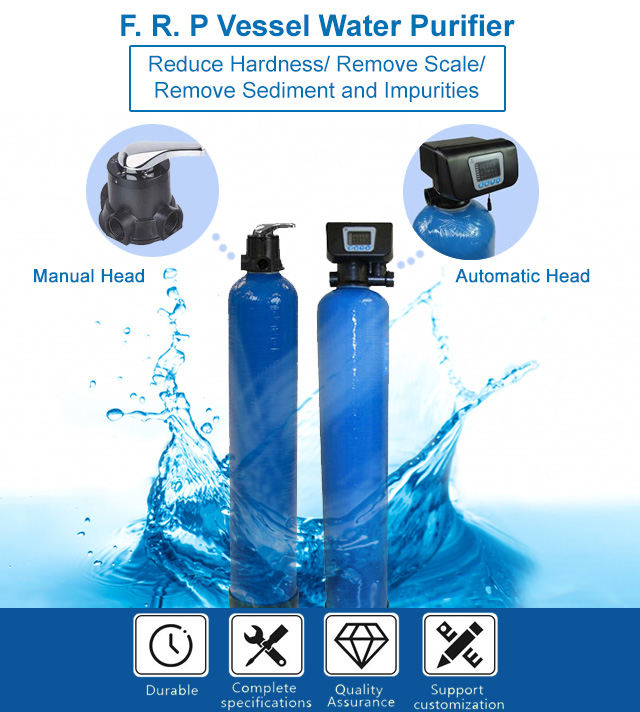
Multimedia filters typically utilize three layers of media for multimedia filtration: anthracite, sand and garnet. These media are often chosen for use in multimedia filters due to the distinct differences in their densities. Anthracite is the lightest filtration media per unit volume, followed by sand, and then garnet.
The idea behind using media with differing masses is that during backwashing the lightest media with the largest particles (anthracite) will naturally stratify at the top of the filter, while the intermediate sized media (sand) will settle in the middle, and the heaviest media with the smallest particles (garnet) will settle to the bottom.
This layering of the filtration bed encourages the very largest contaminants to become trapped in the first layer of the filter, with smaller particulates sifting farther down into the lower layers. Trapping contaminants in this manner allows for more efficient turbidity removal and for longer run times between backwash cycles. A simple sand filter can be expected to eliminate particles down to 25-50 microns in size, as compared to a multimedia filter that can remove particles down to 10-25 microns.